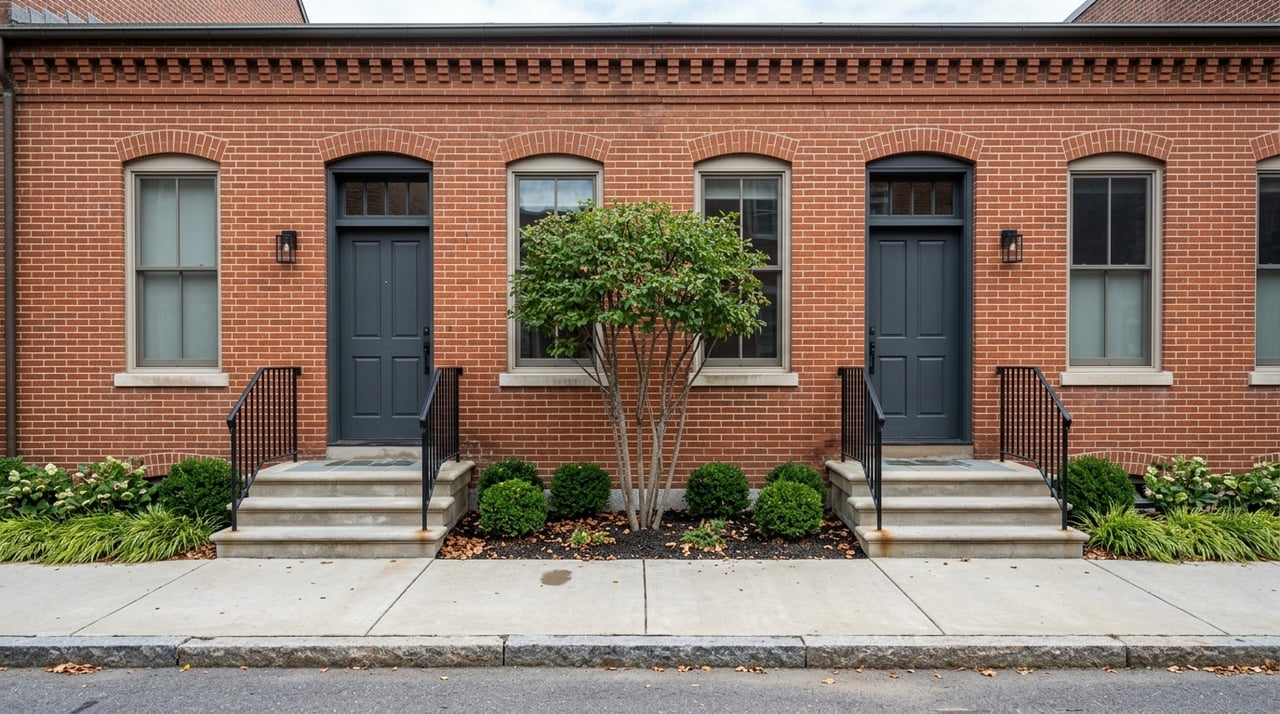
Main Line Condos And Townhomes For Low-Maintenance Living
June 18, 2026
June 18, 2026
Are you drawn to the Main Line lifestyle but not the yard work, exterior repairs, or weekend maintenance that often come with a detached home? You are not alone. Many buyers want easy access to Main Line communities, transit, and walkable town centers while keeping day-to-day home upkeep simpler. This guide will help you compare condos and townhomes, understand real monthly costs, and narrow down what fits your goals. Let’s dive in.
The Main Line is still closely tied to the historic rail corridor west of Philadelphia, and today many of its best-known communities remain connected by SEPTA’s Paoli/Thorndale line. Station towns such as Ardmore and Narberth continue to shape how people live, commute, and shop along the corridor. That pattern helps explain why condos and townhomes are often concentrated near transit, business districts, and higher-density neighborhoods.
If you want Main Line access without the responsibilities of a larger property, this can be a smart way to buy into the area. In places like Ardmore, Bryn Mawr, Conshohocken, Wayne, Paoli, Berwyn, Devon, and Malvern, current listings show a consistent supply of condo and townhome options. For many buyers, that creates more flexibility in both lifestyle and price point.
Choosing between a condo and a townhome usually comes down to how much space you want, how much privacy matters to you, and what type of maintenance you want the association to handle. On the Main Line, both property types can support a low-maintenance lifestyle, but they often do it in different ways.
Main Line condos often appeal to buyers who want the least hands-on upkeep. Current listings in Bryn Mawr and Conshohocken show features like secure building access, on-site management, shared parking, storage, in-unit or common laundry, pools, balconies, and lounge or outdoor gathering spaces. Many condo layouts are one or two bedrooms with a smaller footprint that can feel easier to manage.
That smaller size is often the tradeoff for shared services and amenities. For example, some Bryn Mawr condo listings include open-concept layouts and dedicated parking, while Wayne and Conshohocken listings show garage parking, pools, and other building perks. If your priority is simple living with fewer exterior responsibilities, a condo may check the right boxes.
Townhomes usually give you more room to spread out while still avoiding much of the exterior work tied to a detached house. Current Main Line examples often include two to four bedrooms, multiple living levels, attached garages, and outdoor areas such as decks or patios. In places like Wayne, Paoli, Berwyn, and Malvern, listings also show open main floors and community amenities like pools.
For many buyers, the biggest advantage is the balance between space and convenience. You may get a private entrance, more separation between living areas, and storage that better fits a long-term lifestyle. If you want low-maintenance living but do not want to downsize too far, a townhome may feel like the better middle ground.
Some Main Line communities sit somewhere between a traditional condo and a traditional townhouse. In Devon, Arbordeau is described as a townhome-style condominium where the association handles items like roofs, gutters, leaf cleanup, water, sewer, trash, snow removal, mowing, and landscaping. In Villanova, Wrenfield advertises 24-hour security, exterior and grounds coverage, trash and snow removal, and private walking trails.
These communities are a good reminder that the label alone does not tell the full story. Two homes may look similar from the street but come with very different ownership structures and monthly obligations. That is why reading the association documents matters just as much as touring the property itself.
Low-maintenance options tend to be strongest where transit access and walkable business districts overlap with denser housing stock. In practical terms, that often means communities such as Ardmore, Bryn Mawr, Conshohocken, Wayne, Paoli, Berwyn, Devon, and Malvern. Buyers who want easier commuting or a more connected day-to-day routine often start their search in these areas.
This pattern also helps explain why inventory can feel very different from one town to the next. Some communities have a deeper bench of condo buildings, while others lean more heavily toward townhome and carriage-home developments. If you are open to a few nearby towns instead of just one zip code, you may find better choices and a clearer value match.
On the Main Line, condos often offer a lower entry point than townhomes, though there is still a wide range depending on location, size, parking, and amenities. Redfin currently shows median condo listing prices around $367,000 in Bryn Mawr, $422,000 in Conshohocken, and $310,000 in Wayne. Individual examples range from a $155,000 one-bedroom in Bryn Mawr to higher-priced units in Conshohocken and Wayne with garages, pools, or notable HOA fees.
Townhomes tend to run higher, especially in central and western Main Line communities. Current median townhouse listing prices are about $505,000 in Ardmore, $552,000 in Paoli, and $569,000 in Wayne. In Berwyn and Malvern, current listings stretch higher, with examples ranging from the upper $400,000s to well above $1 million in some communities.
The bigger takeaway is not just that townhomes usually cost more. It is that newer construction, garages, extra square footage, and premium community amenities can quickly push the budget upward. A smaller condo may offer a more approachable purchase price, while a larger townhome may better match your space needs if the monthly costs still work for you.
If you are comparing low-maintenance homes, the homeowners association can shape your real cost of ownership as much as the sale price. Pennsylvania requires condo resale disclosure materials that include documents such as the declaration, bylaws, rules, current monthly assessment, other fees, proposed capital expenditures, reserve amounts, budget information, financial statements, pending judgments or suits, and insurance coverage. Planned-community townhome associations have similar budget and records requirements.
That makes your review process especially important. The key question is not simply whether a property has an HOA. The better question is what the HOA actually covers, how strong the reserve fund is, and whether there are warning signs like special assessments or unresolved legal issues.
Main Line-area listings show just how wide the range can be. Current examples include a Wayne townhome with a $150 HOA, a Chesterbrook or Wayne-area townhouse with a $350 HOA, Paoli townhomes with $300 HOAs and pool access, a Malvern townhome with a $192 HOA, a Malvern carriage home with a $544 HOA and pool access, a Bryn Mawr condo with a $440 HOA, and a Wayne condo with an $821 HOA.
In general, more amenities and more maintenance coverage often mean higher monthly dues. That does not automatically make a higher HOA bad. It simply means you need to understand what you are paying for and whether it supports your budget and lifestyle.
HOA dues are usually paid directly to the association rather than through your mortgage servicer. That means they should be part of your monthly housing math from the beginning. When you compare homes, it helps to look at principal, interest, taxes, insurance, utilities, maintenance, and HOA dues together instead of focusing only on the purchase price.
A lower-priced condo with a higher HOA may end up costing as much each month as a more expensive townhome with a lower fee. Looking at the all-in number can keep you from falling in love with the wrong property for your budget.
The best choice usually comes down to your daily routine and your long-term plans. If you want the simplest setup possible and are comfortable with less square footage, a condo may be the better fit. If you want more living space, a garage, or a private entrance while still reducing exterior upkeep, a townhome may make more sense.
Here are a few practical questions to ask yourself:
Your answer may not be the same as another buyer’s, even at the same price point. On the Main Line, low-maintenance living is less about choosing the “best” property type and more about finding the right mix of space, services, and cost.
When you tour condos and townhomes, it helps to compare more than the kitchen finishes and floor plans. Focus on the ownership details that affect everyday life. Ask what the association covers, review the budget and reserve information, and look closely at any planned capital projects or added fees.
This is also where local guidance matters. Two properties with similar asking prices can have very different monthly obligations, maintenance responsibilities, and resale dynamics. A thoughtful comparison can help you move forward with more confidence and fewer surprises.
If you are exploring condos or townhomes on the Main Line, working with a local team that understands the area’s communities, pricing patterns, and association questions can make the process much smoother. The Fizzano Family of Associates Realtors offers hands-on buyer guidance across the Main Line and nearby suburbs, with the clear communication and local perspective that help you make a smart move.
Stay up to date on the latest real estate trends.
We all know that the world has changed and Real Estate has as well. If you are contemplating selling or buying, please allow me the opportunity to talk with you about my “Win/Win” Real Estate solution!

FIZZANO FAMILY OF ASSOCIATES REALTORS®
ADDRESS
104 WILTON WOODS LN
MEDIA PA 19063