One Glen Mills ZIP Code, Six Townships, and a Septic Inspection Clock That Doesn't Start the Same Way Twice
September 24, 2026
September 24, 2026
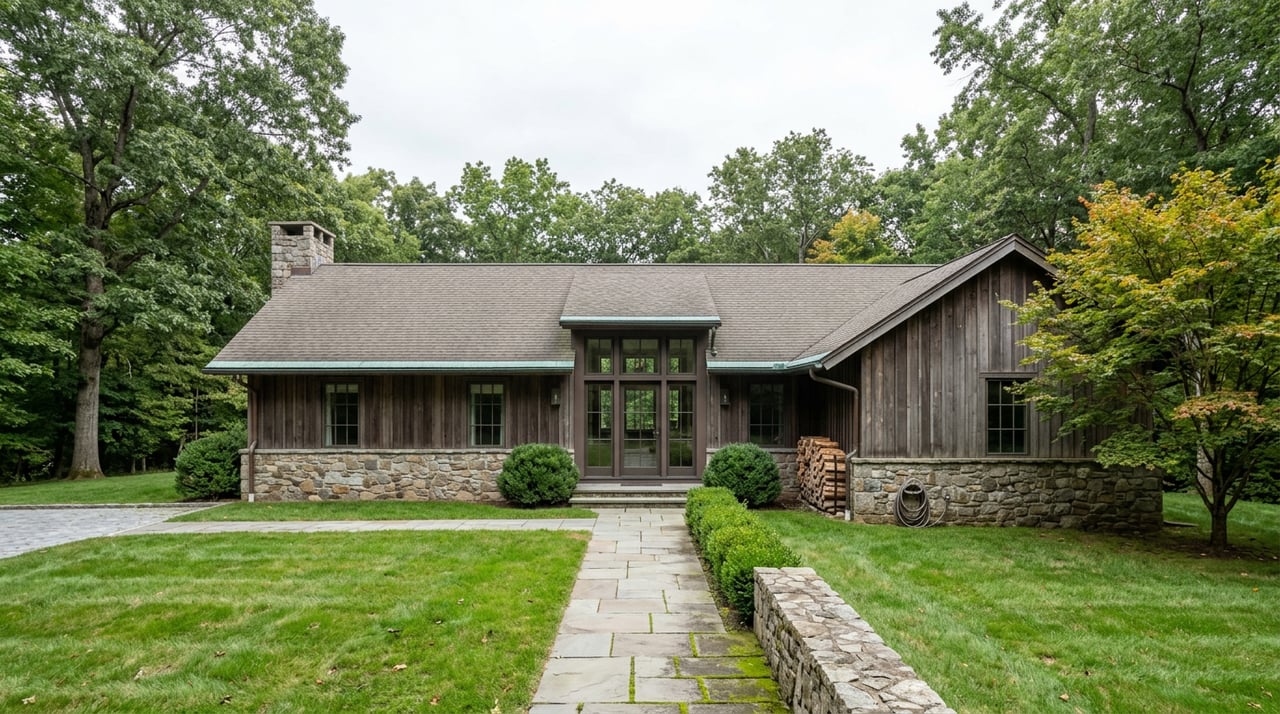
Picture two Glen Mills listings a few minutes apart by car. One is a stone farmhouse tucked off Glen Mills Road, the kind of property where the well house is a converted shed and the septic tank has never shown up on a public sewer map because there is no public sewer to map it against. The other sits in a subdivision built sometime between the mid-1980s and the mid-2000s, a short walk from Glen Eagle Square, on public water and public sewer like most of its neighbors. Both carry a 19342 address. Both will show up in the same search when a buyer types "Glen Mills homes for sale." And both, if either one changes hands this year, will be governed by rules that have almost nothing to do with each other.
That is the part most buyers never think to check, and the part that can quietly derail a closing timeline if nobody asks about it until the inspection is already scheduled.
Glen Mills is not a town in the legal sense. It is an unincorporated community centered in Concord Township, and its 19342 ZIP code stretches across pieces of six named townships: Concord, Thornbury (in both Delaware and Chester counties), Middletown, Chadds Ford, Edgmont, and Westtown. The ZIP code also includes the smaller places of Chester Heights, Gradyville, and Concordville. The two Thornbury Townships share a name and nothing else. That detail alone tells you something important: a mailing address in Glen Mills is a postal convenience, not a jurisdiction.
Here is why that distinction actually matters once a house goes under contract.
| Governing body | What it controls for a Glen Mills property |
|---|---|
| The individual township (Concord, either Thornbury, Middletown, Chadds Ford, Edgmont, or Westtown) | Whether a septic system must be inspected and certified before the property can transfer |
| The Commonwealth of Pennsylvania | Whether the seller must disclose known defects in the water and sewage systems, regardless of township |
| The buyer's lender | Whether a well water test or minimum well-to-septic distance is required as a condition of the loan |
Three layers, three different owners, and none of them automatically defers to the others.
Pennsylvania's Real Estate Seller Disclosure Law, codified at 68 Pa. C.S. § 7301, applies statewide. Every seller of a one-to-four unit residential property has to complete a disclosure form that asks directly about the water source, whether it's public, a community system, or a well on the property, and the type of sewage system, whether public sewer, private sewer, septic tank, or cesspool. That part is uniform no matter which side of Glen Mills a house sits on.
What is not uniform is whether the septic system has to pass an actual inspection before the deed changes hands. Septic & Well Pro says Pennsylvania has no statewide requirement forcing a septic pump-out and certification at the point of sale. Each municipality decides for itself through its Sewage Enforcement Officer, and the answer ranges from a full mandatory inspection and pump-out to nothing at all. A buyer who assumes their contingency period will look like the one their cousin went through two towns over is working from the wrong playbook.
Even where a township has no mandate, the loan program can create one anyway. EffectiveAgents says FHA, VA, and USDA financing typically requires a water potability test and minimum clearances between the well and the septic system before the loan can close. Conventional financing usually skips this unless something in the inspection raises a flag. That means the same house, sold to two different buyers with two different loan types, could face two different pre-closing checklists.
Glen Mills earned this housing mix honestly. A scattering of stone farmhouses along Glen Mills Road and the country lanes toward Thornton predate the subdivisions by more than a century, some tracing back to a farm district that suburbanized quickly in the late twentieth century. Those properties are far more likely to sit on a private well and an on-lot septic system than the newer construction closer to Baltimore Pike. The ground itself plays a role too. The terrain around Glen Mills rolls toward Chester Creek and its feeder streams, which is why several subdivision lots were graded for walkout basements on the downhill side, a feature that looks great in a listing photo and can develop drainage problems years later if the original grading has settled.
This isn't a hypothetical pattern. A stone residence tied to the historic Newlin-Sharpless property, part of the same grounds as the Newlin Grist Mill built in 1704 in Concord Township, has been marketed running on a private well and an on-site septic system, the kind of listing where the disclosure form and the eventual inspection carry real weight rather than being a formality. Properties like this are exactly why a buyer's first question in Glen Mills should never be "what does the house look like" without a close second question: "what township is it actually in, and what does that township require before this can close?"
The deed doesn't ask what township a house sits in. The closing timeline does.
When a septic inspection is required, whether by the township or by the loan, the numbers are fairly consistent across Delaware and Chester County. Local inspectors serving Glen Mills price a standard home inspection starting around $325, with well and septic testing added based on the property. A dedicated pre-listing septic evaluation, separate from the general home inspection, typically runs $300 to $600 and includes pumping the tank and checking the drain field. If that inspection turns up sludge buildup from overdue pumping, the fix usually costs another $300 to $500. None of this is unusual for the region, but it adds real days to a transaction that a buyer moving from a public-water, public-sewer property might not expect to plan for.
There's also a contractual detail that catches people off guard. Under the Pennsylvania Association of Realtors' standard Agreement for the Sale of Real Estate, if a buyer's inspector requires access to the on-lot sewage system, the seller is responsible for locating the tank, providing access, and pumping it at the seller's own expense, then restoring the property afterward. Plenty of longtime homeowners genuinely don't know where their tank is until this moment arrives. Finding out during an active contingency period, rather than before listing, is how a straightforward thirty-day close turns into something longer.
If you're looking at a Glen Mills property, ask which township it sits in before you get attached to it. That single fact tells you whether to expect a mandatory septic certification, an informal one, or none at all from the municipality, and it's a five-minute question for your agent to answer against the tax parcel.
If you're financing with FHA, VA, or USDA, plan for a well and septic evaluation regardless of what the township requires
If you're selling an older stone property on well and septic, the smartest move is getting ahead of it. A pre-listing septic inspection costs a few hundred dollars and puts you in control of the narrative, either with clean documentation that reassures a buyer or with early knowledge of a problem you can price into the listing rather than negotiate away after an accepted offer.
Does Pennsylvania require a septic inspection before I can sell my Glen Mills home? Not automatically. There's no statewide mandate. The requirement, if one exists, comes from the township your property sits in, so the honest answer depends on whether you're in Concord, one of the two Thornburys, Middletown, Chadds Ford, Edgmont, or Westtown.
What if my home is on public water and public sewer? Then most of this doesn't apply to you. You'll still complete Pennsylvania's standard seller disclosure form, but there's no separate well or septic inspection to schedule.
How do I find out which township my prospective home is actually in? Your county tax parcel record will list the municipality, and any agent working the area regularly should be able to confirm it before you write an offer.
Glen Mills rewards buyers and sellers who ask the right question early, not the ones who assume a ZIP code tells the whole story. If you're weighing a purchase or a sale in Glen Mills and want someone who already knows which township you're standing in before the inspection contingency clock starts, reach out to Fizzano Family of Associates and request a free consultation and home valuation. We'll walk the specifics with you before they become surprises.
This article is general information, not legal, tax or financial advice. Consult a qualified professional about your situation.
Stay up to date on the latest real estate trends.

We all know that the world has changed and Real Estate has as well. If you are contemplating selling or buying, please allow me the opportunity to talk with you about my “Win/Win” Real Estate solution!

FIZZANO FAMILY OF ASSOCIATES REALTORS®
ADDRESS
104 WILTON WOODS LN
MEDIA PA 19063