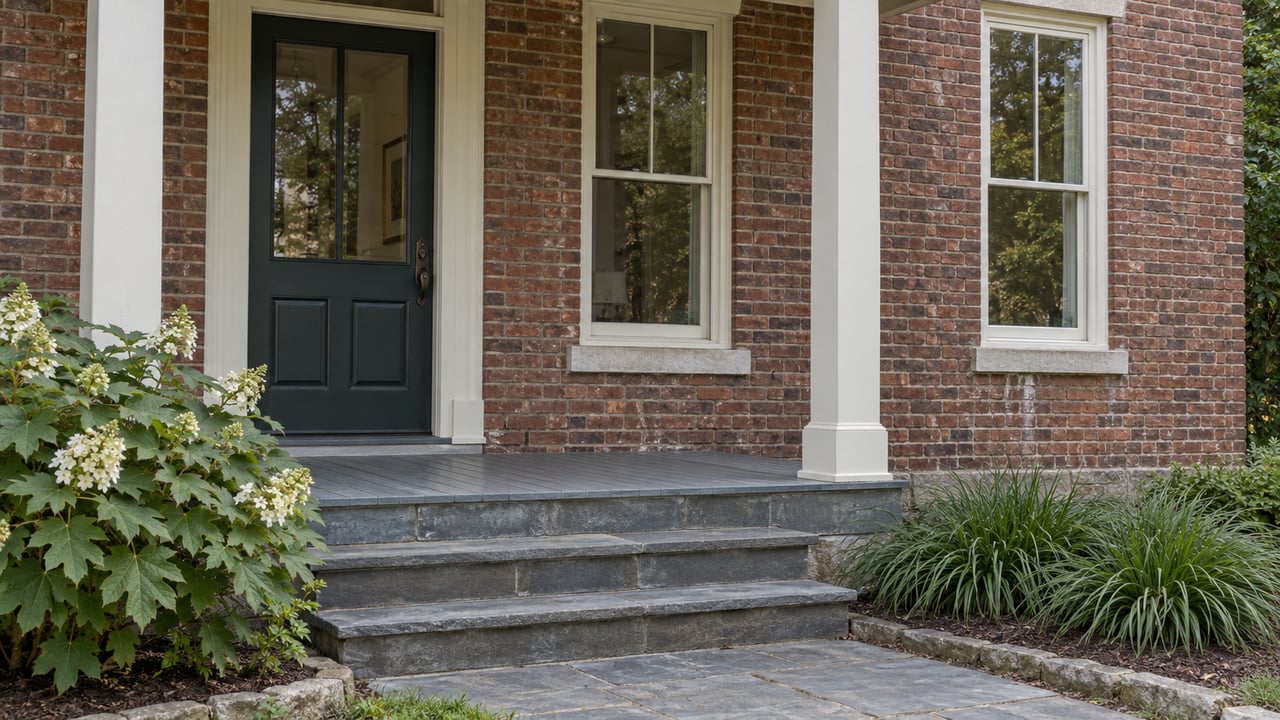
Media, PA's Historic Homes Can Pass Inspection and Still Lose the Deal
October 1, 2026
October 1, 2026
A buyer makes an offer on a Victorian twin near Veterans Square. The inspector walks the basement, checks the panel, writes up the report, and the ten-day contingency clears without a fight. Everyone assumes the hard part is over. Then the insurance quote comes back as a decline, and the electrician who's supposed to fix it says the repair means a new service mast on the front of the house, which means a filing with the borough before anyone can touch it.
That sequence isn't rare in Media Borough's historic core. It's close to routine, because the housing stock on streets like Jasper, Orange, and Third radiating out from Veterans Square and the Delaware County Courthouse predates the borough's 1850 incorporation in some cases, and runs heavily through the 1880s to the 1930s in general. A home inspection tells a buyer what's wrong with a house. It doesn't tell them whether an insurer will write a policy on it, or whether the borough will let the fix happen on the timeline the deal needs.
The inspection contingency is the clock everyone negotiates. The other two clocks run independently of the purchase agreement, and they don't care what date is typed into it.
| Clock | Who controls it | Typical duration |
|---|---|---|
| Inspection contingency | Buyer and seller, negotiated in the contract | Commonly around 10 days |
| Insurance underwriting | The carrier, once an electrician's letter or inspection report is submitted | Days to a few weeks, carrier-dependent |
| Historic district review (Certificate of Appropriateness) | Media Borough's Board of Historical Architectural Review | Board meeting within 30 days of application, per the borough's own ordinance |
The inspection contingency is designed to be fast because it's the mechanism buyers use to walk away or renegotiate. Insurance underwriting and historic district review were never built with a real estate closing date in mind. They run on their own institutional pace, and in a borough where a meaningful share of the housing stock is old enough to trigger both, they can stack on top of each other without either side realizing it until it happens.
Knob-and-tube wiring was the standard method for running electricity through walls and framing from the 1880s into the 1940s, and Inspection Professionals notes that it's still legal to have in an existing home. No Pennsylvania statute forces an owner to rip it out. The practical obstacle isn't the law. It's that most homeowners insurance carriers won't write a standard policy on a home where the system is still active, and the specialty carriers that will charge noticeably more for the privilege.
That matters in Media because the borough's housing stock runs heavily through exactly the decades when knob-and-tube was the default installation method, not the exception. A house doesn't need to be a museum piece to have it. It just needs to have gone a few decades without a full electrical upgrade, which describes plenty of well-maintained twins and foursquares in the historic core.
The fix is straightforward in theory: bring in a licensed electrician, get a letter confirming the condition of the system, and rewire if needed. A full rewire on a typical twin home runs on the order of one to three weeks depending on the contractor and how much patching the walls need, and rewiring costs typically start around $5,000 before scaling up with square footage. None of that is unusual for an older home purchase anywhere in the region. What's specific to Media is what happens next if the rewire touches the outside of the house.
Media Borough's Chapter 183 historic district ordinance requires anyone doing exterior work within the historic district to first file for a Certificate of Appropriateness with the Borough Building Inspector. The Board of Historical Architectural Review then has to meet with the applicant within 30 days of that filing, review the plans, and advise Borough Council before anything proceeds. The board itself is built to include an architect, a professional artist, someone experienced in real estate transactions, and someone from the building trades, with at least four members required to be borough residents.
A new electrical panel tucked in a basement corner doesn't usually raise this issue. A new exterior service mast, a relocated meter, or anything visible from the street can. If the insurance-driven electrical fix includes any of that, the homeowner isn't just waiting on an electrician's schedule. They're waiting on a municipal board that must meet within 30 days, with review and advice to Borough Council still to follow, layered on top of whatever the insurance underwriting already took.
None of this is unique to any one address. It's built into the ordinance itself, and it applies the same way whether the seller has lived there for thirty years or the buyer is three weeks from closing.
Media's market doesn't leave much room to absorb a stacked delay. Recent figures put homes in the 19063 zip code going to pending in around six days, with an average home value near $567,000, up close to 5 percent over the prior year. City-level median sale price data through June 2026 put the figure closer to $541,705, up almost 12 percent year over year, while other trackers using slightly different geographies showed medians as high as $724,900 in July 2026 or a twelve-month figure around $653,758. The spread across those numbers isn't a data error. It reflects the same borough-versus-township complexity that shapes everything else about buying in Media: a zip code that mixes Media Borough proper with Upper Providence and Middletown townships, each carrying its own tax rate on top of a shared Delaware County millage that rose roughly 19 percent for 2026.
A market where homes go to pending in about a week is a market where the board may have up to 30 days to meet, a deadline that reads as an eternity to a seller with a backup offer waiting and as a real risk to a buyer whose rate lock has an expiration date. The friction isn't the historic district ordinance itself. It's that the ordinance's timeline was never built to sync with a six-day pending window, and nobody in the transaction notices the mismatch until the insurance decline forces the electrical question into the open.
For a buyer, the fix is sequencing. Order the electrical evaluation in the same week as the home inspection, not after an insurance decline forces the issue. Ask early whether the specific address sits inside the borough's designated historic district boundary, since that determines whether any exterior electrical fix needs a Certificate of Appropriateness at all. If it does, discuss the board's 30-day meeting deadline with the seller when setting the closing timeline.
For a seller, the same logic runs in reverse. An electrician's letter obtained before listing, or a Certificate of Appropriateness filed ahead of an accepted offer, means the board's 30-day deadline to meet is already running by the time a buyer is under contract, rather than starting then, while review and advice to Borough Council still need to happen before work proceeds.
Is knob-and-tube wiring illegal in Pennsylvania? No. There's no statewide requirement to remove it from an existing home. The obstacle is practical, not legal: most insurers decline to write a standard policy while it's still active, and most lenders will want an electrician's confirmation that the system is safe before closing.
Does every home in Media need a Certificate of Appropriateness for electrical work? Only if the property sits within the borough's designated historic district and the work is visible from the exterior, such as a new service mast or a relocated meter. Interior panel upgrades typically fall outside that requirement, but confirming the property's specific boundary status is worth doing before assuming either way.
How long does the Board of Historical Architectural Review actually take? The ordinance requires the board to meet with the applicant within 30 days of filing. The 30 days is the deadline for the board to meet; review and advice to Borough Council still must happen before work proceeds. Complex requests or a board schedule that doesn't align with a tight closing date can push the overall process longer.
Can a seller get ahead of this before listing? Yes. An electrician's evaluation and, if needed, an early Certificate of Appropriateness filing can happen while the home is still just a listing in preparation, which keeps the borough's review clock from competing with a buyer's closing date later.
If you're buying or selling a pre-1940 home in Media's historic core, the sequencing questions above are exactly the kind of thing worth working through before an offer goes in, not after an insurance letter arrives. Fizzano Family of Associates can walk you through what a specific address's historic district status and electrical history mean for your timeline, free of charge.
This article is general information, not legal, tax or financial advice. Consult a qualified professional about your situation.
Stay up to date on the latest real estate trends.

We all know that the world has changed and Real Estate has as well. If you are contemplating selling or buying, please allow me the opportunity to talk with you about my “Win/Win” Real Estate solution!

FIZZANO FAMILY OF ASSOCIATES REALTORS®
ADDRESS
104 WILTON WOODS LN
MEDIA PA 19063