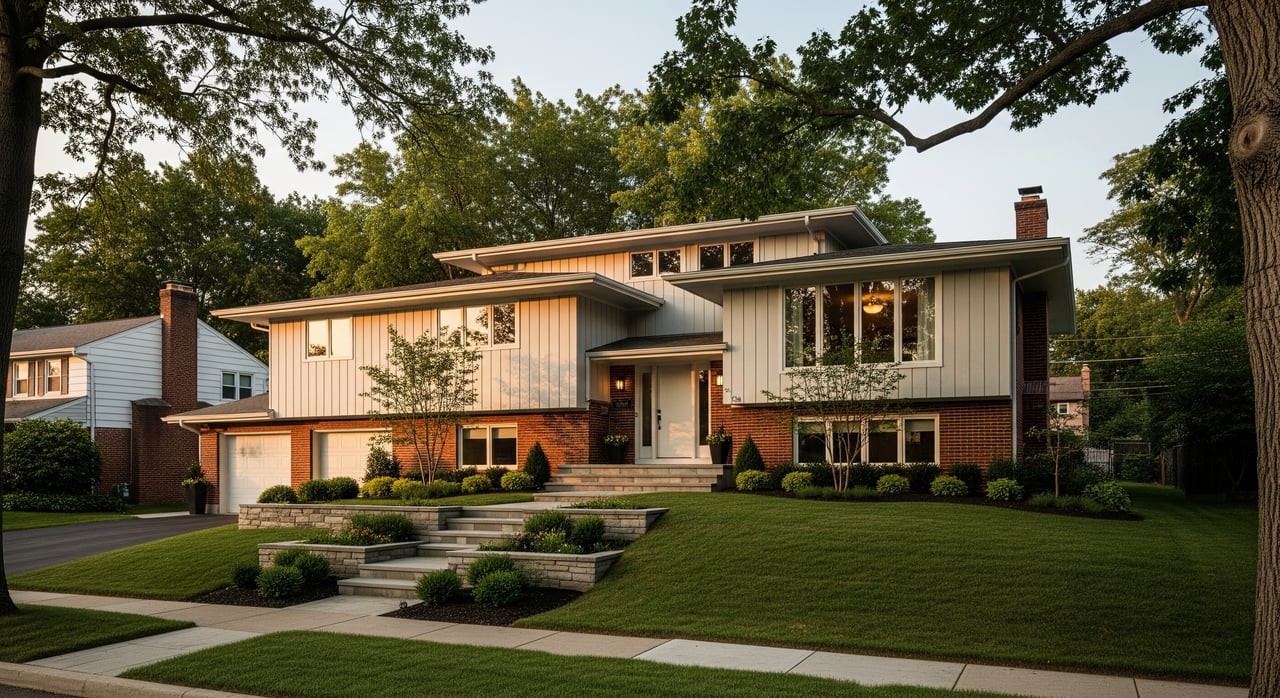
Pricing Split-Level Homes In Springfield
January 15, 2026
January 15, 2026
Thinking about selling your split-level in Springfield and not sure where to start on price? You’re not alone. These mid-century homes are popular in Delaware County, but their staggered levels, lower-level spaces, and mix of updates make pricing feel tricky. In this guide, you’ll learn what drives value for split-levels, how to choose the right comps, and what to fix before you list so you price with confidence. Let’s dive in.
Split-levels appeal to buyers who want defined spaces for living, sleeping, and gathering. That separation can be a plus for many families. It can be a drawback if a buyer wants single-level living or a very open plan. If your home’s layout has been opened up or improved for flow, you may see stronger buyer interest.
Appraisers and the MLS follow standards like ANSI to count Gross Living Area. Above-grade square footage is counted in GLA. Finished rooms that are below grade are usually treated as finished basement area, not GLA. That finished lower level still adds value and utility, but it often contributes less per square foot than space above grade.
Kitchens and bathrooms have an outsized impact on perceived value and time on market. Even modest updates can help. Buyers and appraisers also look closely at major systems like roof, HVAC, plumbing, and electrical. Newer or well-maintained systems reduce risk for buyers, while aging components can lead to price adjustments.
Many Springfield buyers filter by commute to Center City or nearby job centers. Proximity to regional rail or key highways can widen your buyer pool. Document these benefits when pricing and positioning your home.
Value can shift block by block in suburban neighborhoods. Lot size, privacy, and orientation matter. So do nearby noise corridors like busy roads. If your home offers a quiet setting or larger lot, that can support stronger pricing compared with close-in but busier locations.
School district boundaries and policies can shape buyer search filters. Keep language neutral and factual when describing schools. Point buyers to official district sources for attendance boundaries and confirmations.
In active markets, focus on closed sales from the past 3 to 6 months within about a half mile to 1 mile. If split-levels are scarce, you can extend to 9 to 12 months or a wider radius. Note any time or distance adjustments clearly.
Prioritize split-level comps with similar layouts. If you must include other styles, document the functional differences. Adjust for key items like finished lower levels, bathroom count, garage type, and recent renovations.
Most buyers search within set price ranges, commute times, and neighborhoods. Small price moves can place your home in a different search bucket. Position your list price so your condition and features match what buyers expect at that price point.
In a balanced market, slightly under key thresholds can spark more showings and potential multiple offers. In slower periods, realistic pricing near market value can shorten days on market and reduce carrying costs. Align your approach with current local activity.
Fix items that hurt value and buyer confidence. Address roof leaks, water intrusion in lower levels, failing HVAC, and any electrical or structural issues. These repairs reduce renegotiation risk after inspection.
Many Springfield split-levels were built before 1978. Be ready for required lead-based paint disclosures. Consider pre-listing inspections to uncover issues early. A general home inspection, termite report, and sewer scope for older lines can prevent surprises.
Moisture is a common concern in split-level lower levels. If you have signs of water entry, price in or complete remediation like grading, sump pumps, or interior drains. Confirm that any lower-level bedrooms meet egress rules to support how spaces are described.
You deserve a clear plan, not guesswork. Our team studies recent solds in Bright MLS, confirms measurements and finished space categories, and documents adjustments so you can see exactly how your price was built. We cross-check against active and pending competition to position your listing for the widest pool of buyers.
As a family-run brokerage in Delaware County, we pair hands-on advocacy with modern marketing and weekly communication. If you’re preparing to list a split-level in Springfield, we’ll help you decide what to fix now, what to disclose, and how to set a price that aligns with buyer expectations. Ready to talk strategy for your home? Reach out to the Fizzano Family of Associates Realtors.
Stay up to date on the latest real estate trends.

We all know that the world has changed and Real Estate has as well. If you are contemplating selling or buying, please allow me the opportunity to talk with you about my “Win/Win” Real Estate solution!

FIZZANO FAMILY OF ASSOCIATES REALTORS®
ADDRESS
104 WILTON WOODS LN
MEDIA PA 19063