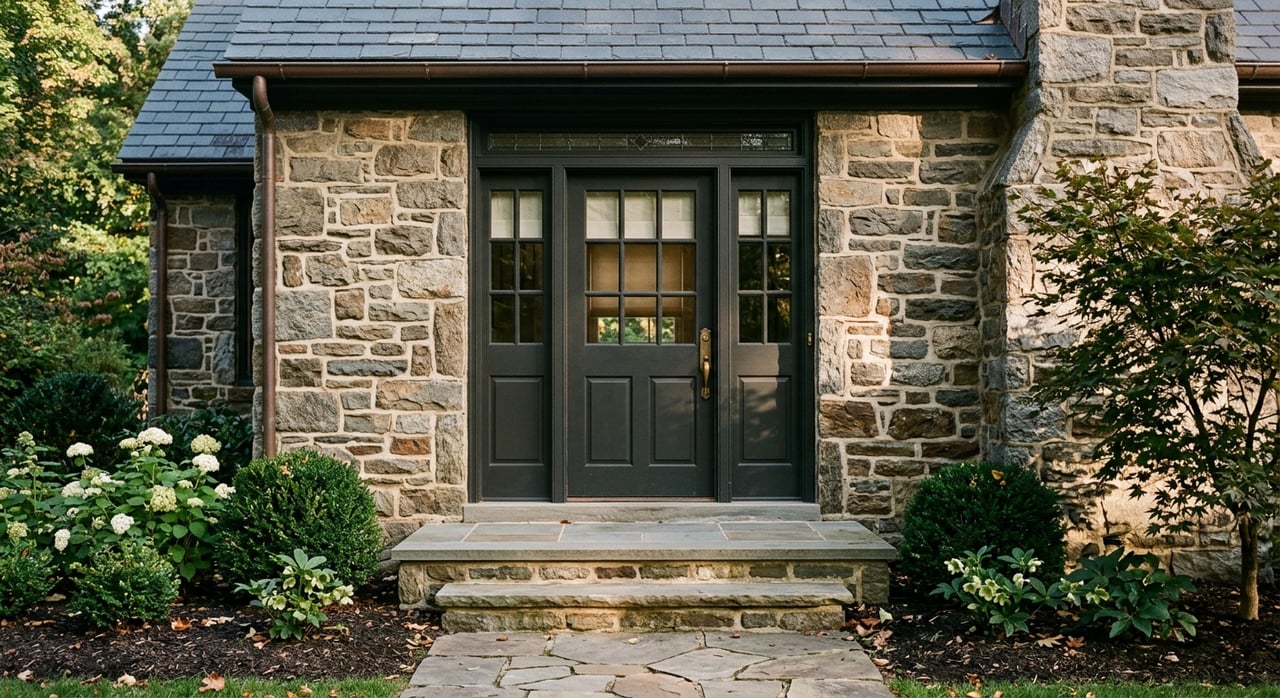
Selling A Historic Home On The Main Line
June 25, 2026
June 25, 2026
If you are selling a historic home on the Main Line, you are not just listing square footage and bedroom count. You are presenting a property with age, craftsmanship, and a paper trail that often matters as much as the finishes. That can feel exciting and a little overwhelming at the same time. The good news is that with the right prep, you can protect the home’s character, meet local requirements, and market it with confidence. Let’s dive in.
Historic homes on the Main Line do not all follow one set of rules. Because the region spans multiple municipalities, requirements can vary by township, borough, or district. In Pennsylvania, municipalities can create local historic districts, require a Certificate of Appropriateness before certain exterior changes or demolition, and appoint a Historic Architectural Review Board to review that work.
That means your first step is not guessing. It is confirming whether your home is in a locally regulated historic district, whether prior work needed review, and whether any upcoming pre-listing repairs or changes may trigger local approval. On the Main Line, that township-specific detail can affect your timeline, your repair strategy, and how you answer buyer questions.
Lower Merion’s planning materials identify a large number of significant historic properties and potential historic districts. Lower Merion also notes that in local districts, exterior alterations, new construction, and demolition require HARB and COA review, while other designated properties may still be reviewed by the Historical Commission.
Other Main Line municipalities have their own systems. Radnor’s HARB reviews certain work in North Wayne, and Tredyffrin has a plaque program that encourages stewardship of pre-1945 properties. In practical terms, sellers benefit from checking local status early rather than assuming the same rules apply across the entire Main Line.
Older homes often have issues that are manageable when you discover them early and stressful when they surface during buyer inspections. A historic home sale usually goes more smoothly when you treat pre-listing prep like a fact-finding stage, not just a cosmetic stage. The goal is to understand condition, organize records, and decide what is worth addressing before the home hits the market.
Pennsylvania’s Seller Disclosure Act provides a useful checklist for this process. It specifically calls for disclosure related to the roof, basements and crawl spaces, termites and wood-destroying insects, structural problems, additions and remodeling, water and sewage systems, plumbing, heating and air conditioning, electrical systems, soils and drainage, hazardous substances, and legal or title issues.
For many Main Line historic homes, these areas deserve close attention:
When you identify issues early, you have more control. You can repair them, price for them, or disclose them clearly with supporting records.
Historic homes often raise buyer questions about lead, radon, and asbestos. Addressing those topics early can reduce uncertainty and help your listing feel more transparent and well managed.
Lead-based paint is especially important in older housing. According to the EPA, 87% of homes built before 1940 and 24% of homes built between 1960 and 1978 contain some lead-based paint. Sellers of most pre-1978 housing must disclose known lead-based paint and known lead hazards before contract.
Radon also matters in Pennsylvania. The Pennsylvania Department of Environmental Protection says about 40% of homes tested in Pennsylvania are above the EPA’s 4 pCi/L action guideline. Testing can give you clarity before a buyer asks for it.
Asbestos can also come up in older materials, especially if something is damaged or likely to be disturbed. The EPA advises that damaged asbestos-containing material, or material that may be disturbed, should be repaired or removed by a trained and accredited asbestos professional. If paid renovation work disturbs painted surfaces in older homes, lead-safe certified workers may also be required.
A common mistake in historic home prep is over-updating. Buyers who are drawn to a historic Main Line property are often responding to original materials, proportions, millwork, masonry, windows, porches, and flooring. If you strip away too much character before listing, you may weaken one of the home’s strongest selling points.
Preservation guidance from the National Park Service supports a practical approach. Rehabilitation is the most commonly used treatment for historic buildings, with standards aimed at preserving character-defining materials while allowing compatible changes. For sellers, that often means repair first, replacement second.
Historic windows are a strong example. The National Park Service says repair should be the first option, and windows can often be improved with weatherstripping, glazing, sash work, or storm windows. Replacement may make sense in select situations, but only when deterioration or performance needs truly justify it.
The same logic applies to masonry-heavy homes. For stone, brick, and other masonry, useful pre-listing work often includes checking mortar joints, drainage patterns, and signs of water intrusion. Preservation guidance emphasizes regular exterior maintenance, moisture control, compatible repointing, and limited replacement in kind where needed.
Some cosmetic shortcuts can create new concerns instead of solving old ones. Poorly matched mortar, inappropriate coatings on masonry, or wholesale replacement of original features may make buyers wonder what was covered up or whether work was done thoughtfully.
In contrast, careful stabilization and documented maintenance tend to support buyer confidence. A well-kept historic home does not need to look brand new. It needs to look cared for, honest, and properly maintained.
Historic home buyers often ask more detailed questions than typical buyers. They may want to know what was original, what was repaired, what was replaced, and whether visible changes were reviewed where required. A complete seller package can make those conversations much easier.
Historical documentation is more than a nice extra. The National Park Service describes it as a detailed record of a property’s context and significance, and Historic Structure Reports can include research, condition information, measured drawings, and treatment recommendations. Even if you do not have a full Historic Structure Report, organized records still matter.
Try to assemble:
This kind of paper trail helps buyers understand the home’s history and stewardship. It can also reduce confusion during inspection and negotiation.
A historic listing should do more than mention charm. It should show why the home matters and what has been done to preserve it. That means your marketing should be specific, factual, and rooted in visible features and documented care.
Good historic home marketing often highlights original stone or brick, millwork, flooring, windows, porches, scale, proportion, and evidence of ongoing maintenance. It should reflect the home’s architectural and historical significance rather than trying to make the property sound like a generic updated house.
Buyers often connect with details like:
When your presentation is accurate and well documented, the home feels more credible. That matters in a market where buyers may be balancing emotion with caution.
Historic home sales often take more coordination than standard listings. If exterior work is visible from the public right of way or falls within a local district review process, approvals may affect when work can start and when the home is ready to list.
That is why early planning matters. Instead of waiting until a photographer is booked, start by confirming local review requirements, assessing condition, and organizing records. A more deliberate timeline can prevent last-minute surprises.
Here is a simple way to think about the process:
The Main Line is not one uniform historic market. A seller in Lower Merion may face a different process than a seller in Radnor or Tredyffrin. Even two homes with similar age and style can have different review, documentation, and repair considerations depending on location and designation status.
That is where local, hands-on guidance can make a real difference. You want a plan that connects pricing, prep, approvals, disclosure, and presentation, not a one-size-fits-all approach. Historic homes reward careful strategy, and that strategy works best when it is tailored to your municipality and your property.
If you are preparing to sell a historic home on the Main Line, Fizzano Family of Associates Realtors can help you create a thoughtful selling plan with personalized guidance, clear communication, and a marketing approach that respects both your home’s history and your goals.
Stay up to date on the latest real estate trends.

We all know that the world has changed and Real Estate has as well. If you are contemplating selling or buying, please allow me the opportunity to talk with you about my “Win/Win” Real Estate solution!

FIZZANO FAMILY OF ASSOCIATES REALTORS®
ADDRESS
104 WILTON WOODS LN
MEDIA PA 19063